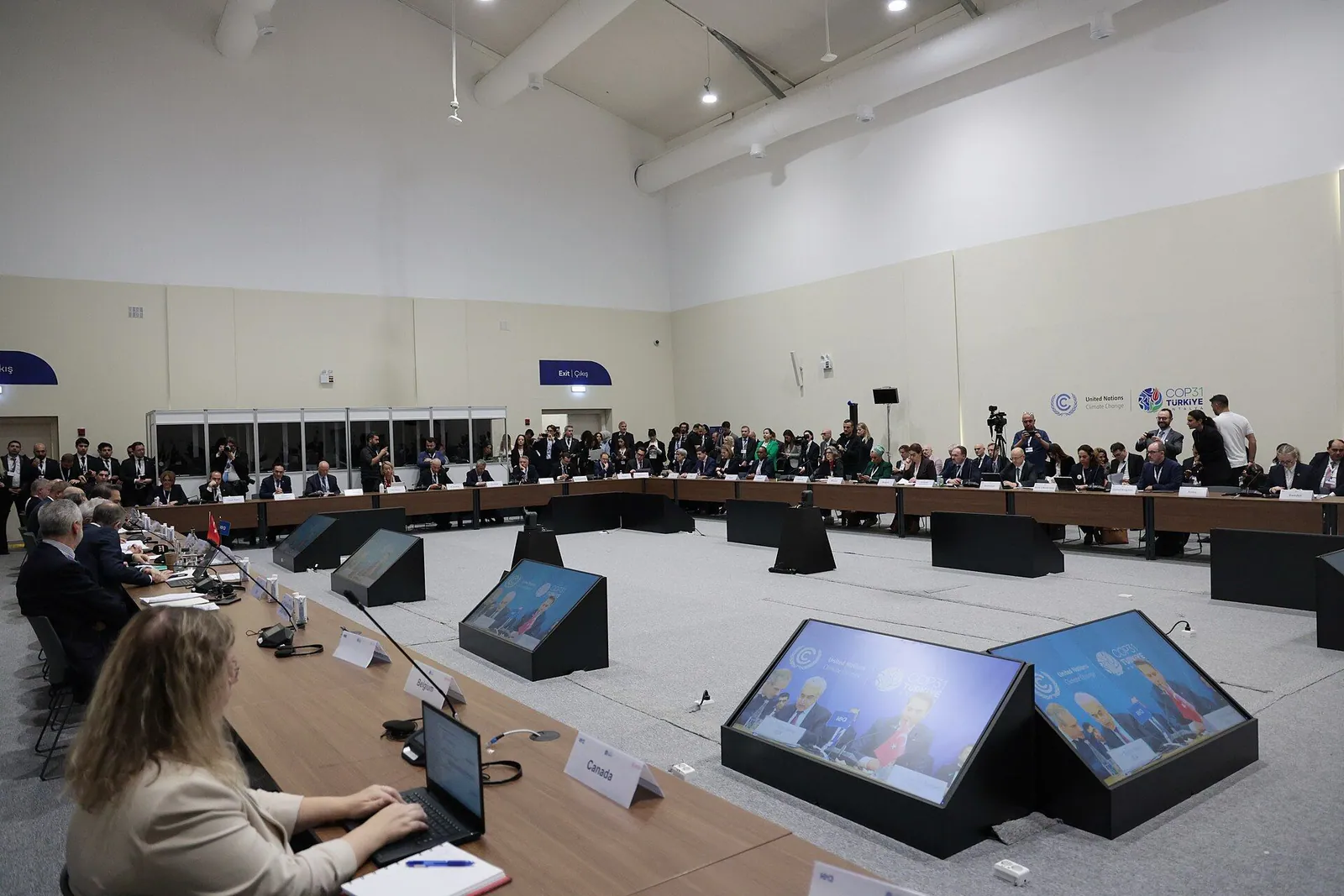
Negotiators at the COP31 climate summit in Antalya, Türkiye, were still divided on Friday, 20 November, after explicit language about moving away from fossil fuels disappeared from a draft agreement. The conference was scheduled to conclude that day, but the draft was not a final adopted decision.
The United Nations' 20 November dispatch reported that ministers and the conference presidency were trying to bridge differences. The Associated Press reported objections from climate-vulnerable countries and campaigners, who argued that a deal without a clear fossil-fuel commitment would fall short of the summit's purpose.
Why the wording matters
At COP28 in Dubai in 2023, governments agreed to contribute to transitioning away from fossil fuels in energy systems in a just, orderly and equitable manner. A UN Climate Change document for COP31 explicitly recalls that agreement. The absence of equivalent wording from the latest negotiating text therefore became a test of whether countries would translate earlier commitments into an implementation plan.
The draft also proposed increasing electricity's share of global final energy use from roughly 21% to 35% by 2035, according to AP. Electrification alone, however, does not guarantee lower emissions: its climate impact depends on how electricity is generated. A higher share of electricity produced from fossil fuels would have a different effect from a comparable increase supplied by low-emissions generation.
The distinction matters for governments setting energy and industrial policy. Electricity targets can shape investment in grids, vehicles, heating and factories, while the sources powering those grids determine how much carbon pollution actually falls. The draft target and the fossil-fuel wording therefore address related but not interchangeable questions.
Finance remains contested
Developing countries have demanded more reliable funding for adapting to heat, floods and other climate hazards. AP reported that a draft called for tripling adaptation finance but did not specify a dollar amount, unlike an earlier version that cited $120 billion annually. Those figures describe competing negotiating texts, not funds already delivered or a binding final pledge.
UN Secretary-General António Guterres has urged richer countries to provide affordable climate finance and support a fair transition away from fossil fuels. His call is a policy position, not evidence that negotiators have agreed.
For poorer countries, the form of finance is important alongside its headline size. Support that adds debt can have different budgetary consequences from grants, while delayed disbursement may leave communities without resources to prepare for climate shocks. Negotiators' disagreement is thus not simply about the language of a declaration: it concerns who bears the costs of implementing it.
What is agreed and what is not
The UNFCCC confirms COP31 is being held from 9 to 20 November in Antalya, with Türkiye hosting and Australia chairing negotiations. Its agenda includes adaptation, climate finance and other implementation questions. These are established facts about the process; they should not be confused with approval of the latest proposed text.
The UN's account and AP's reporting describe a live negotiation. The disappearance of a phrase from a draft does not by itself mean governments have formally reversed the COP28 agreement, nor does it prove they will restore that phrase in the final document. Both interpretations would go beyond the evidence available at publication time.
What happens next
As of the reporting cited here on 20 November, negotiators had not resolved the fossil-fuel language and financing disputes. A draft may be revised before adoption, and no outcome should be described as a completed COP31 deal until the conference formally approves it.
For energy producers, importers and climate-vulnerable economies alike, the practical question is whether any final text specifies implementation, financing and accountability rather than merely repeating broad ambitions.