Indonesia's National Nutrition Agency (BGN) says its overhaul of the free nutritious meals programme has produced roughly Rp44 trillion in budget savings and returns. The figure deserves scrutiny not because savings are inherently suspicious, but because the agency's own breakdown combines several fundamentally different kinds of money: a smaller budget ceiling, forecast savings from new payment formulas, and funds it says were actually recovered.
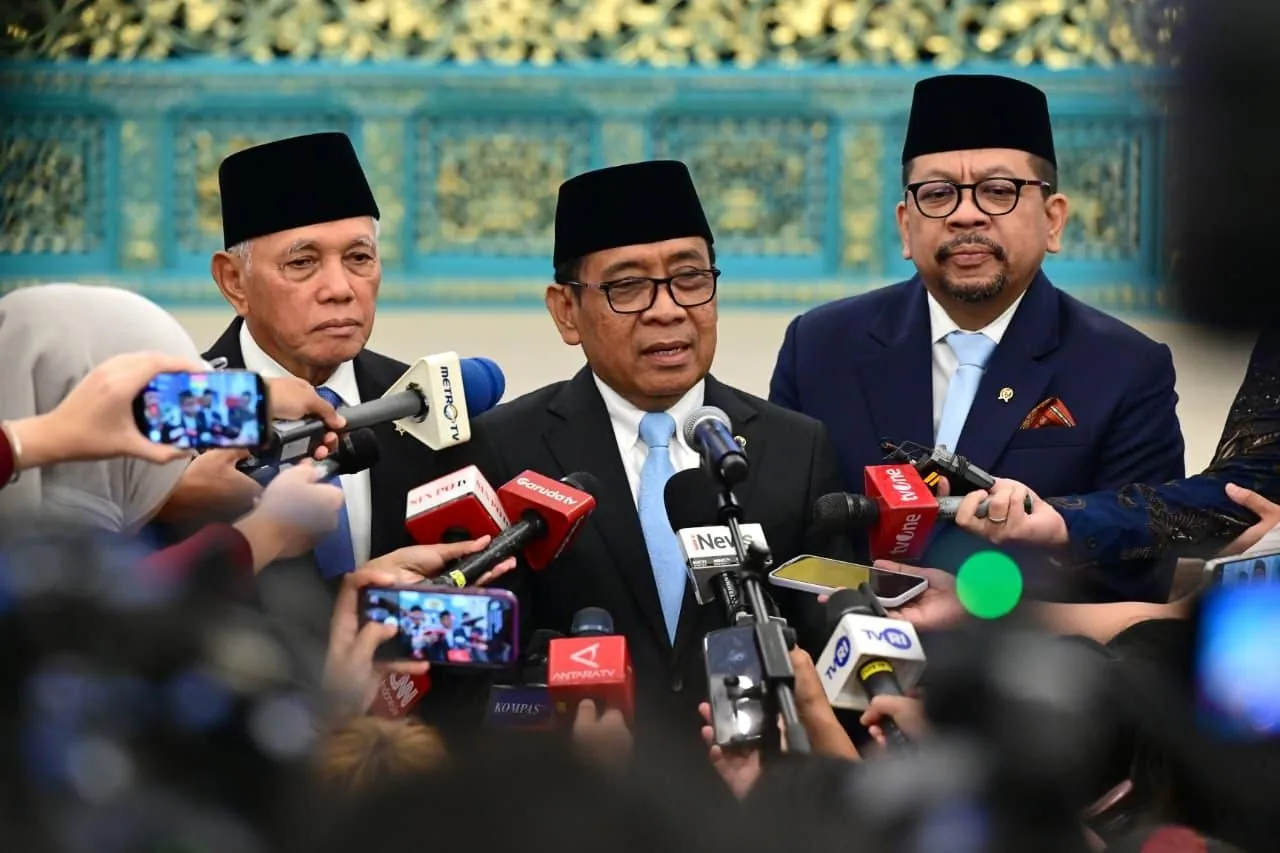
On 20 November 2026, BGN chief Sudaryono repeated the claim during a visit to Jambi. ANTARA reported his assertion that the programme's MBG 2.0 reforms had returned about Rp44 trillion to the state treasury. The agency's more detailed 29 October release provides the essential context missing from that shorthand. It describes an aggregate of efficiency measures and refunds, rather than an independently reconciled Rp44 trillion cash deposit.
What the agency's figures actually describe
BGN said its allocation was revised from Rp268 trillion to Rp229 trillion. The difference between those two rounded figures is Rp39 trillion, although its statement calls the returned budget approximately Rp38 trillion. The discrepancy is an important reason to request the precise before-and-after appropriation documents rather than treat the rounded press-release arithmetic as an audited ledger.
An appropriation adjustment is not automatically a cash transfer. A reduction in an agency's spending authority can mean money will not be disbursed or committed. Whether it represents a transfer into a particular treasury account, a reduction in authorized spending, or a reallocation elsewhere can only be established from Ministry of Finance budget revisions and accounting records. The BGN release does not publish that reconciliation.
The second category is prospective efficiency. BGN said it changed the foundation-partner incentive from a flat Rp6 million per day to Rp2,000 per meal container, estimating savings of Rp2.5 trillion to Rp3 trillion through year-end. This changes the economics of kitchen operations, but the amount is an estimate conditional on actual meals, kitchen volumes, contracts and implementation dates. It is not proof that the full projected sum had been returned in October or November.
The third category is operating expenditure. BGN said it introduced a maximum Rp3,000 operating allowance, replacing an at-cost arrangement that it argued risked excessive claims. It projected up to Rp3 trillion in additional savings by the end of the year. Again, a ceiling and a projected reduction in future expenditure are not the same accounting event as recovered funds.
Finally, BGN reported Rp311.25 billion from a review of 414 problematic or fictitious kitchen virtual accounts and Rp160.37 billion associated with follow-up to findings by the Supreme Audit Agency (BPK). Together these are Rp471.62 billion. These are the portions the agency expressly describes as returned funds, though the underlying transaction receipts and audit schedules were not included in the public summary.
Why the distinction matters
The phrase 'returned to the treasury' can lead readers to picture Rp44 trillion arriving as cash. The agency's own component list does not support that interpretation. Its stated total mixes adjusted spending authority, estimated future reductions and claimed recoveries. These categories can all matter for fiscal management, but adding them without clear labels makes it difficult to judge what has already happened.
The agency's figures also need to be reconciled with each other. Using the headline Rp38 trillion budget adjustment, Rp2.5 trillion to Rp3 trillion in foundation incentives, up to Rp3 trillion in operations and Rp471.62 billion in identified recoveries gives an indicative total ranging from Rp40.97 trillion to Rp44.47 trillion, depending on whether projected operating savings are realized. That is not a verified final balance, and potential overlaps between components have not been ruled out.
BGN's 21 October statement provides more specificity on one recovery: it said Rp160.37 billion had been returned as follow-up to BPK findings in its 2025 financial statements, approximately 81.75% of Rp196.17 billion in findings. That is an agency account of audit follow-up, not independent confirmation that every underlying control failure has been resolved.
Who gains, and who bears the risk?
Lower unit costs could free public resources and make the meals programme more sustainable. Recovering idle or improperly held funds would also strengthen accountability if documented. The government argues that the changes protect taxpayer money and improve service delivery; that rationale should be evaluated against actual financial and nutritional results, not dismissed merely because it comes from an official.
But reducing incentives and capping operating claims may shift financial pressure onto partner foundations, kitchens, workers or suppliers. Whether it does so depends on actual costs, contract terms and enforcement. A lower administrative bill is not necessarily an improvement if it compromises food safety, portion quality, timely supplier payment or coverage of remote communities. There is no basis in the documents reviewed to claim those harms have already occurred because of these particular changes.
The beneficiaries whose interests matter most include schoolchildren, pregnant women, breastfeeding mothers and young children served by MBG. Meaningful evaluation would compare meal counts, nutrition standards, food safety incidents, geographic reach, unpaid obligations and per-meal costs before and after the reforms. A large headline savings figure by itself does not measure any of these outcomes.
What documents should be public?
A credible reconciliation would show the original and revised budget ceilings, the legal budget-revision instruments, actual disbursements, treasury receipts for recoveries, and the treatment of unspent funds. It would separately state realized savings as of a fixed date and forecasts through December, disclose assumptions behind the per-container and operating-cost calculations, and clarify whether any amounts overlap.
It would also identify how the 414 flagged virtual accounts were classified, which amounts were frozen, recovered or still disputed, and how the BPK findings were remedied. The words 'problematic' and 'fictitious' in BGN's account should not be interpreted as a judicial finding of fraud against every kitchen or individual associated with those accounts.
The available releases establish that BGN publicly claimed a roughly Rp44 trillion combined efficiency-and-return figure and outlined measures intended to produce it. They do not independently establish that Rp44 trillion in cash was paid into the treasury. Nor do they establish corruption in the accounting. The outstanding story is one of verifiability: the public needs an auditable bridge from the headline number to real spending authority, realized savings and banked recoveries.