Indonesia's Supreme Court has overturned the 2022 acquittal of retired army major Isak Sattu in the 2014 Paniai human-rights case, sentencing him to five years in prison and ordering compensation for victims. The ruling is a significant reversal in a case concerning four people killed and ten injured during violence surrounding a protest in Papua. Yet it does not resolve every question about responsibility or whether families will actually receive compensation.
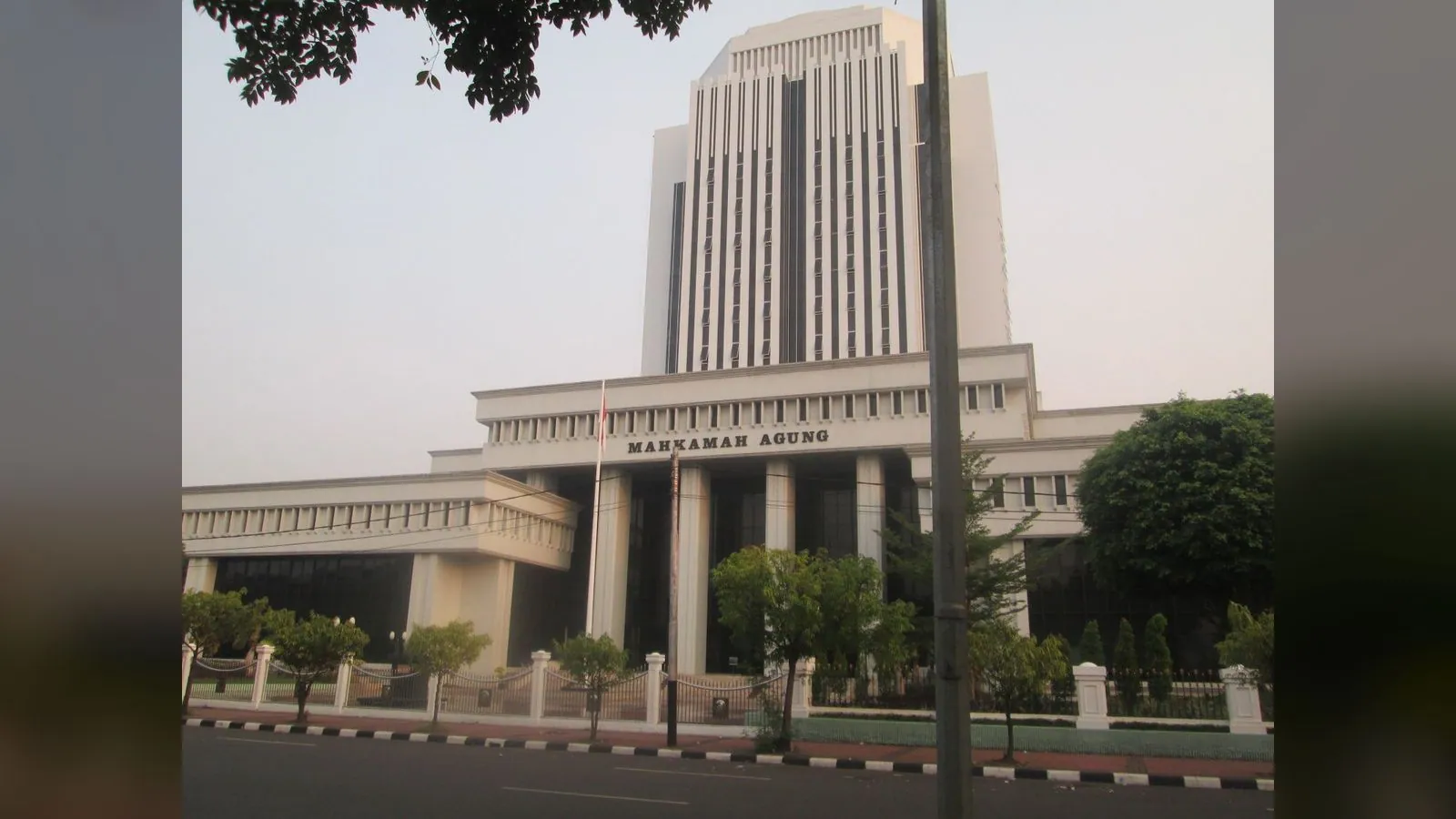
The Supreme Court's official case information identifies the proceeding as 12000 K/Pid.Sus-HAM/2026, decided on 10 November 2026. Its published summary states that the prosecutors' appeal was granted, the lower court judgment overturned, and the first and second charges proved. The case was still listed as undergoing final administrative processing, or minutasi, when checked. The summary is an official case-status record, not a substitute for the complete authenticated judgment and its legal reasoning.
What changed after the acquittal
The Makassar Human Rights Court acquitted Sattu on 8 December 2022, finding that the charges had not been proved. That original judgment is available in the Supreme Court's public decisions directory under 1/Pid.Sus-HAM/2022/PN Mks. Prosecutors challenged the acquittal. The new cassation outcome reverses the earlier result, rather than merely reopening an investigation or announcing an allegation.
The 2014 incident took place in Paniai on 8 December, after tensions involving local residents and security personnel. Reporting by ANTARA describes four people killed and ten wounded. This history matters because the legal case concerns a specific episode and the responsibility attributed to a particular officer; the ruling should not be presented as a blanket finding against every person or institution present.
According to the civil-society Paniai Monitoring Coalition, the court's finding concerns Sattu's position as liaison officer of the local military district command and the issue of command responsibility: whether a superior with effective control failed to prevent or stop crimes by personnel under his authority. This is the coalition's explanation of the case, not a quotation from the full judicial reasoning, which must be checked when available.
Compensation ordered, payment not yet established
The Supreme Court case page specifies Rp250 million for each person killed, Rp210 million for each severely injured victim, Rp115 million for each moderately injured victim, and Rp75 million for each lightly injured victim. These are amounts in the ruling's published summary, not proof that the money has already been paid. The number of eligible recipients in each injury category and the practical process for disbursement were not established from the case summary alone.
That distinction matters to victims and their families. A compensation order can recognise a financial obligation, but its impact depends on identifying recipients, enforcing payment, communicating the process and ensuring that families can access it without unreasonable obstacles. The public record reviewed here does not demonstrate completion of those steps.
The five-year prison term is also distinct from the ten-year sentence prosecutors had previously sought, as reported by ANTARA. The difference should not be confused with an acquittal: the cassation court has entered a conviction. Equally, a conviction of one defendant does not establish criminal guilt for any other individual who has not been tried.
Why campaigners say the case is unfinished
In a 13 November statement hosted by Amnesty International Indonesia, the Paniai Monitoring Coalition welcomed recognition of serious human-rights violations but argued that prosecution of a single defendant did not account for the wider chain of command. The coalition includes legal-aid and human-rights organisations. Its demand for additional investigation is a position advanced by those groups, not evidence that any unnamed official has been found guilty.
The coalition also raised concerns about victims' rights and the broader investigation. A full assessment of those concerns requires the authenticated cassation judgment, the investigative record and responses from prosecutors and relevant military authorities. No new criminal charges against other individuals are established by the sources reviewed for this article.
The earlier acquittal and subsequent conviction illustrate why careful descriptions of procedural status are essential. A trial court's 2022 conclusion was that the evidence did not establish guilt beyond the required standard; the Supreme Court has now reached a different legal outcome on cassation. The complete reasoning is necessary to explain precisely why the higher court rejected the earlier assessment.
What should be scrutinised next
There are at least four concrete accountability questions. First, when will the authenticated full judgment become publicly accessible, beyond the brief online case summary? Second, which victims qualify for each compensation category, and which institution is responsible for delivering payment? Third, what evidence and legal analysis supported the court's reversal? Fourth, have prosecutors examined possible responsibility beyond the sole defendant, and if so what decisions have been made?
None of these questions should be answered by assumption. The published Supreme Court summary establishes a conviction, sentence and compensation schedule. The coalition's statement establishes that advocates want a wider inquiry. Neither source, on its own, proves that payments have been delivered or that further prosecutions are warranted against identified people.
For residents of Paniai, the distinction between a formal court victory and effective remedy is consequential. Recognition of a violation can matter deeply, but accountability is also measured by transparent judicial reasons, lawful treatment of defendants and actual access to reparations. Further reporting should track those verifiable steps rather than treating the judgment as the end of the story.
Sources: Supreme Court case information; 2022 Makassar court decision; ANTARA, 18 November; Paniai Monitoring Coalition statement, 13 November.