Key points
- Kemnaker said on 15 November 2026 that no institution has been chosen to manage the severance reserve fund and that reports of mandatory deposits into Danantara are untrue.
- Article 253 of Law No. 27 of 2026 requires employers, except micro and small firms, to provide a severance reserve managed by a government institution.
- The government regulation setting contributions, deposits and payouts has not been issued.
- A ministry official said on 13 November that Dapen and DPLK pension funds will not manage the reserve and gave an October 2027 deadline.
- Apindo warned of new costs and overlap with existing schemes; KSPI asked who pays and how the rule will be enforced.
Indonesia's Ministry of Manpower (Kemnaker) said on Sunday, 15 November 2026, that the government has not yet chosen the body that will manage the new severance reserve fund, and that reports saying employers must now pay the money into Danantara, the state investment agency, are untrue.
The statement came two days after a senior ministry official told employers that company pension funds would no longer handle severance reserves and that the money must be handed to a government institution by October 2027. Clips of that briefing spread on social media with captions saying workers' severance pay would have to be "deposited into a government account".
What the ministry said on 15 November
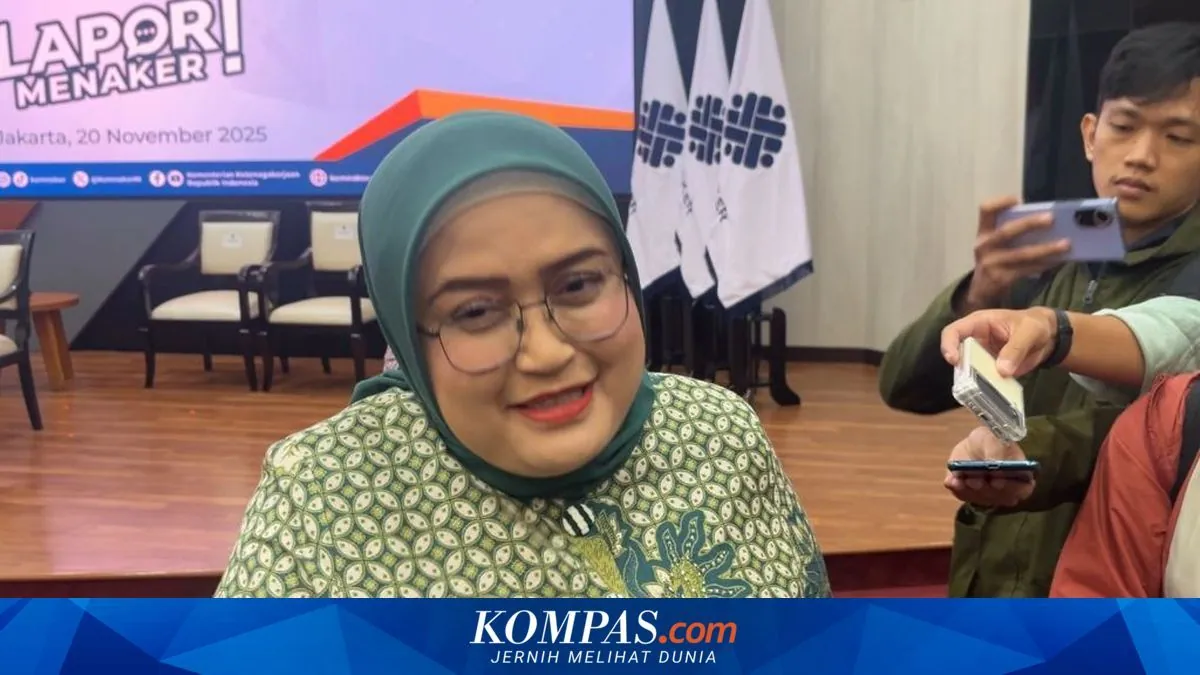
"Information saying that employers are now required to deposit severance reserve funds into Danantara is not true. Until now there has been no government decision on the institution that will manage the severance reserve fund," Indah Anggoro Putri, Kemnaker's Director General of Industrial Relations and Workers' Social Security, said in a statement carried by Antara and Kompas.com.
Indah said the ministry had never stated that Danantara would manage the fund, nor that Kemnaker itself would. She said the rules still need an implementing regulation, which will begin with public consultation of employers, unions and other stakeholders, and which is expected to set out the fund's management, governance, sources of funding, the managing body and how it is held accountable, according to Antara.
What the law actually says
The obligation comes from Law No. 27 of 2026 on Labour Protection, signed by President Prabowo Subianto and promulgated on 28 October 2026, according to the ministry's legal database (JDIH Kemnaker). Parliament approved the bill on 6 October 2026, Antara reported.
Article 253 requires employers to provide a severance reserve fund (Dana Cadangan Pesangon, DCP) as the source of payments owed to workers who are dismissed for reasons other than retirement and who are not covered by a pension programme. Paragraph 3 says the fund "is managed by a government institution". Micro and small businesses are exempt, and paragraph 6 lists administrative sanctions from a written warning up to revocation of a business licence, according to the article text published by law firm SPP & Partners and reports by Liputan6.
CNN Indonesia's summary of Articles 254 to 258 says:
- The reserve comes from employer assets set aside in the company balance sheet each year, is placed with the designated government institution and is recorded as an asset of the worker concerned.
- The fund must be managed separately from the managing institution's own assets.
- When a worker is dismissed, the institution pays the worker directly at the employer's request. If the reserve falls short, the employer pays the difference; any surplus returns to the employer.
- If a worker resigns or the job ends for reasons other than dismissal, the institution returns the reserve to the employer within 14 working days.
- The transitional Article 321 says the obligation applies no later than one year after the law was promulgated.
The size of contributions, the timing of deposits and the payout procedure are left to a government regulation (PP), which has not been issued. Indah said on 13 November that the government was still drafting both a PP and a ministerial regulation, Liputan6 reported.
Pension funds and the October 2027 deadline
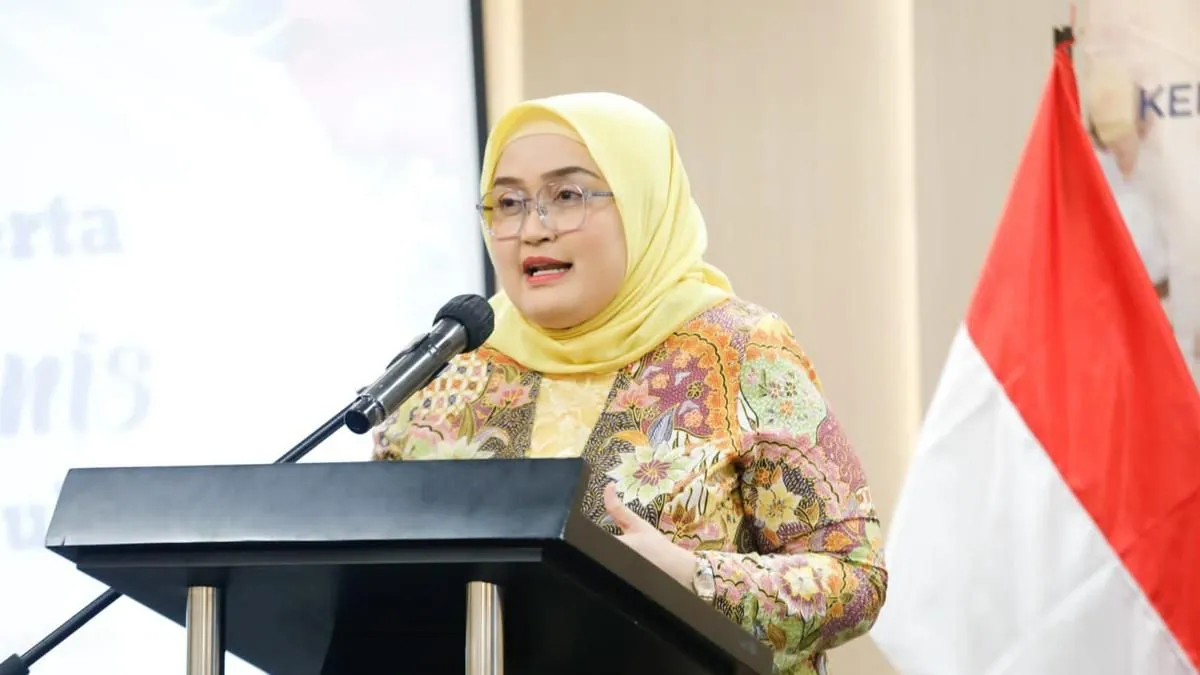
At a public briefing on the law on Friday, 13 November, Indah said employer pension funds (Dapen) and financial institution pension funds (DPLK) would not manage the reserve. "The law says the manager is a government institution, appointed by the government," she said, as quoted by Liputan6. She said many companies had asked for Dapen to keep this role, but that "this law does not allow it".
She told DPLK managers to prepare because "by October 2027 all severance funds must be handed over" to the reserve fund, according to Liputan6 and detikFinance. In the same briefing, detikFinance quoted her as saying that "in 2028 there will already be" a fund manager, so the exact start date for deposits is not yet fixed. How reserves that companies built up before the law will be treated has not been settled, detikFinance reported.
Reactions
Employers questioned the plan. Bob Azam, who heads labour affairs at the Indonesian Employers Association (Apindo), told Liputan6 on 14 November that a new body would bring new fixed costs and overlap with existing schemes such as old age savings (JHT), job loss insurance (JKP) and pension insurance (JP). "This is severance, but it is managed like a pension," he said.
Unions welcomed the principle but asked for details. Said Iqbal, president of the Confederation of Indonesian Trade Unions (KSPI) and of the Labour Party, said on 7 October that employers would have to place money "separately from company assets in one government-owned institution", but asked who would pay and what sanctions would apply, detikFinance and Tirto reported. He warned the provision could become a "paper tiger" without enforcement. The text later published does list administrative sanctions in Article 253.
In parliament, Nihayatul Wafiroh, deputy chair of House Commission IX, said in September during deliberations that the severance guarantee was the House's own proposal and that lawmakers wanted the money managed through BPJS Ketenagakerjaan, the state workers' social security agency, JawaPos reported. The final text names only "a government institution", and no agency has been designated.
What to watch
The government must still issue the implementing regulation, name the managing institution and set contribution levels. Kemnaker said it would announce each step officially once the regulation has been discussed and enacted.
Sources
- 1.Kemenaker: Pemerintah belum tetapkan pengelola dana cadangan pesangon (Antara, 15 Nov 2026), antaranews.com
- 2.Danantara Bakal Kelola Dana Cadangan Pesangon? Kemenaker: Tidak Benar! (Kompas.com, 15 Nov 2026), money.kompas.com
- 3.UU Nomor 27 Tahun 2026 tentang Pelindungan Ketenagakerjaan (JDIH Kemnaker), jdih.kemnaker.go.id
- 4.UU Pelindungan Ketenagakerjaan resmi terbit, bisa diakses publik (Antara), antaranews.com
- 5.Pasal 253 UU 27/2026 (SPP & Partners legal corpus), spplaw.id
- 6.Aturan Lengkap Dana Cadangan Pesangon yang Wajib Disisihkan Pengusaha (CNN Indonesia, 15 Nov 2026), cnnindonesia.com
- 7.Pemerintah Bentuk Lembaga Dana Pesangon, Perusahaan Wajib Setor Oktober 2027 (Liputan6, 13 Nov 2026), liputan6.com
- 8.Awas, Perusahaan Tak Setor Dana Cadangan Pesangon Bisa Kena Pidana (Liputan6, 13 Nov 2026), liputan6.com
- 9.Dana Pesangon Mau Dikelola Pemerintah, Perusahaan Wajib Setor Oktober 2027 (detikFinance, 15 Nov 2026), finance.detik.com
- 10.Pemerintah Mau Kelola Dana Pesangon, Ini Alasannya (detikFinance), finance.detik.com
- 11.Respons Pengusaha Soal Rencana Pembentukan Pengelola Dana Cadangan Pesangon (Liputan6, 14 Nov 2026), liputan6.com
- 12.Ada Dana Cadangan Pesangon di UU Ketenagakerjaan, Buruh: Siapa yang Bayar? (detikFinance), finance.detik.com
- 13.KSPI Khawatir Aturan Baru Ketenagakerjaan Ompong Tanpa Sanksi (Tirto), tirto.id
- 14.DPR Dorong Ketentuan Pesangon Buruh dalam RUU Ketenagakerjaan, Minta BPJS yang Mengelola (JawaPos), jawapos.com