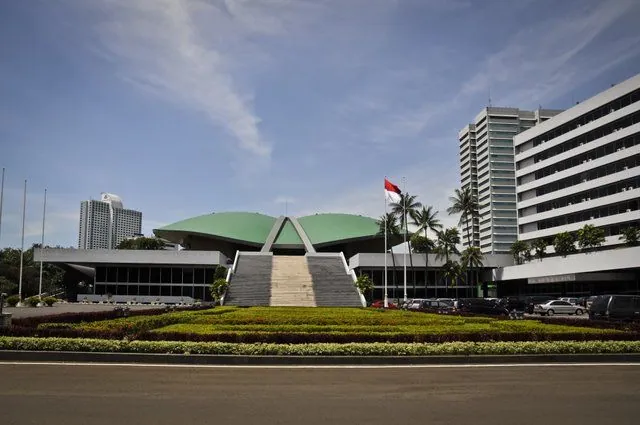
Indonesia's parliamentary police oversight committee has urged investigators to consider treason charges in an alleged illegal surveillance operation that targeted President Prabowo Subianto and numerous other people. The demand, recorded in a November 12 statement by the House of Representatives, goes beyond the electronic-access and interception offences currently being investigated. It raises a central accountability question: can authorities establish the extent and purpose of the surveillance without treating political suspicion as a criminal verdict?
What the police investigation has established
On November 3, police announced suspects in an investigation into alleged unauthorized interception, illegal access and deletion of electronic data. ANTARA reported that the suspects included former national police chief Listyo Sigit Prabowo, who had subsequently served as presidential chief of staff. Police said they had examined witnesses and seized electronic evidence. A suspect designation is not a conviction.
On November 4, State Secretary Minister Prasetyo Hadi said President Prabowo had signed a decree removing Listyo from the chief-of-staff post and appointed Lieutenant General Ariyo Windutomo as acting chief. That administrative decision does not determine criminal liability. ANTARA subsequently reported that three suspects remained in custody at the police Mobile Brigade headquarters on November 6, while another suspect had not been detained due to illness.
An Associated Press report published November 13 says the police chief told lawmakers that the alleged operation also affected officials, politicians, governors, anti-corruption personnel, activists and students. Being a surveillance target does not suggest wrongdoing by the person monitored. The report also describes allegations concerning destruction of recordings; the investigators must establish the chain of custody and what can still be recovered.
Parliament's demand for treason charges
In its official November 12 account of a hearing with Police Chief Suyudi Ario Seto, the House's Commission III said the suspected illegal interception, electronic access and deletion of data should be treated as treason. Chairman Habiburokhman called for investigators to examine whether additional people were involved. Earlier parliamentary statements had also raised allegations of unlawful surveillance, online opinion manipulation and mobilization of protests. These remain attributed allegations, not established facts about protesters or civil-society organizations.
The legal distinction matters. Illegal interception and misuse of a police system are serious allegations in themselves. A treason charge would require proof of the specific statutory elements, not simply political disagreement or an inference from the target's identity. The parliamentary committee can demand scrutiny, but prosecutors and courts must assess admissible evidence independently.
A November 9 House report cited information that more than 6,000 people might have been targeted. That figure is a parliamentary claim, not a published, independently audited list of confirmed victims. It should not be presented as an exact verified total. The authorities have not made a full target inventory available in the documents reviewed here.
Why the public should care beyond the president
If a surveillance system designed for lawful investigations was used without proper authorization, the implications reach far beyond elite political rivalry. Potential victims could include activists, students, anti-corruption officials and other people whose communications deserve legal protection. Unauthorized access can expose confidential sources, private conversations and sensitive records. These are risks arising from the alleged conduct, not proof that any particular private conversation was disclosed.
There is also a risk of an overbroad response. The allegation that suspects may have organized protests or manipulated opinion should not become a pretext to characterize peaceful demonstrators as conspirators without evidence. Public assembly and criticism of government must be assessed separately from demonstrable crimes. Likewise, accusations against senior officers require due process, not conclusions reached through political pressure.
The government's position and unanswered questions
Police officials have described the case as a law-enforcement investigation rather than an internal power struggle. Parliament says it wants transparent and accountable proceedings. Those assurances are meaningful only if the public can eventually see a reliable explanation of who authorized access, which systems were used, when the alleged interceptions occurred, and whether information was transferred to third parties.
The committee has asked investigators to trace where intercepted information went. A public account should also explain the legal authorization process for interception, audit logs, safeguards for retained recordings and remedies for people whose privacy was violated. Publishing the contents of private calls would create additional harm; independent oversight need not require releasing sensitive material to the public.
What happens next
Investigators can test the allegations against system logs, authorization records, witness accounts and recovered devices. Prosecutors must then decide which offences are supported by the evidence, while courts determine guilt if charges proceed. Parliamentary oversight should scrutinize the institutional safeguards that allowed any alleged abuse, not merely demand harsher labels.
What is documented: police announced suspects, the president removed Listyo from his government post, and Commission III called for consideration of treason charges. What remains disputed or unverified: the complete list of targets, the precise use of any intercepted material, the alleged connection to protests and whether the evidence supports a treason offence. This report concerns an ongoing investigation; no finding of guilt is implied.
Sources
- 1.DPR Commission III statement, November 12, 2026, emedia.dpr.go.id
- 2.DPR statement on 6,000 possible targets, November 9, emedia.dpr.go.id
- 3.DPR request to trace intercepted information, November 12, emedia.dpr.go.id
- 4.ANTARA police suspects report, November 3, makassar.antaranews.com
- 5.ANTARA presidential removal, November 4, sultra.antaranews.com
- 6.ANTARA detention report, November 6, makassar.antaranews.com
- 7.Associated Press report, November 13, apnews.com