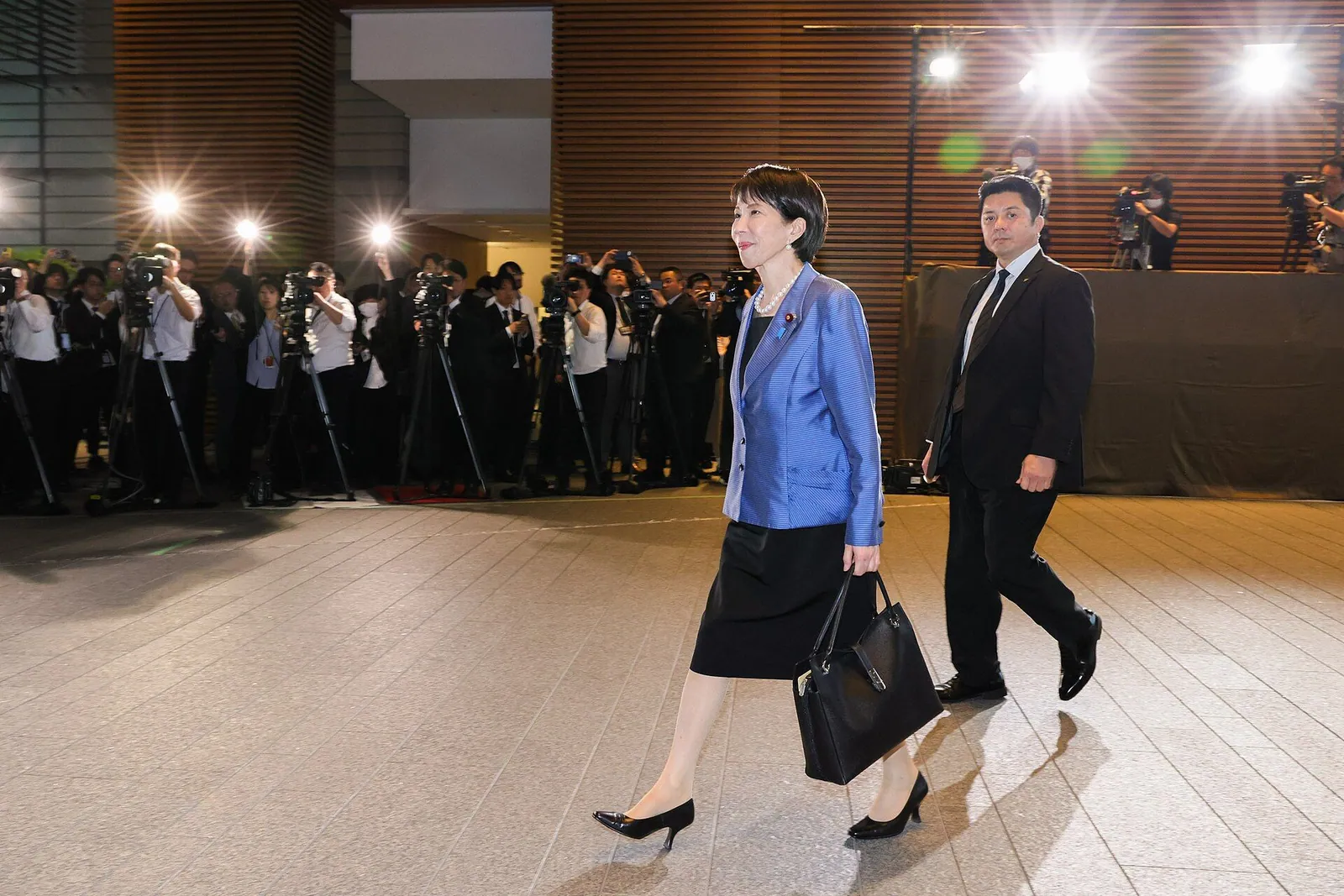
Japan proposed a new Asian oil-security coordination mechanism on Tuesday, November 17, seeking to help Southeast Asian countries withstand supply disruptions after the Iran war exposed the region's dependence on Middle Eastern energy. Prime Minister Sanae Takaichi outlined the initiative during an Asia Zero Emission Community (AZEC) leaders' meeting on the sidelines of the ASEAN summit in Manila.
The plan is a proposal, not an already functioning regional emergency oil authority. Japan and the International Energy Agency (IEA) separately announced their intention to work towards an IEA-Japan Oil Security Hub for Asia, according to a joint statement dated November 17.
What Japan is proposing
Takaichi called for an Asia Oil Security Task Force to improve coordination on strategic oil inventories and emergency releases. She also raised the possibility of allowing regional partners to use idle Japanese storage capacity, alongside a joint stockpiling initiative led by the Philippines. The objective is to develop an Asian mechanism comparable in function, though not necessarily legal structure or membership, to the IEA's emergency oil coordination.
Japan also proposed a Power Gulf Initiative to strengthen links between oil-producing countries in the Middle East and Asian consumers, Reuters reported. These are complementary tracks: building inventories and rules for crises, while maintaining communication with suppliers.
The Japan-IEA joint statement identifies three initial areas for the proposed hub: technical assistance for oil-stockholding systems and infrastructure; better analysis and information sharing on markets and security; and examination of arrangements for emergency cooperation and coordinated responses. It expresses an intention to work towards the hub rather than announcing a completed institution.
Why the Strait of Hormuz matters
Disruption around the Strait of Hormuz during the Iran war has highlighted a longstanding exposure: Asian economies depend heavily on imported Gulf oil and gas. Japan's Agency for Natural Resources and Energy estimates that roughly 90% of crude oil transported through the strait is destined for Asia, according to Reuters. Interruptions can raise fuel costs and threaten feedstocks used in manufacturing, even for countries that do not import directly from the Gulf.
Japan has substantial reserves and established storage infrastructure, while Southeast Asian countries generally have smaller stockpiles. That imbalance makes a shared approach attractive, but sharing tanks and emergency supplies would still require agreements on financing, ownership, access, transport, release triggers and national priorities.
The Philippines and Indonesia's roles
Philippine President Ferdinand Marcos Jr. said Manila was advancing its strategic petroleum reserve and seeking energy investment. He also stressed that stockpiling alone is insufficient: reliable information, working storage arrangements, open sea lanes and transparent markets are essential to lasting energy security.
Indonesia is relevant to the initiative in two ways. It is an AZEC participant, and the Indonesia-based Economic Research Institute for ASEAN and East Asia (ERIA) is expected to work with Japan on rules and technical design for stockpile sharing, according to Associated Press reporting. That does not mean Indonesia has already committed specific barrels, storage sites or funding under the new proposal.
What remains undecided
Neither the proposal nor the joint statement establishes a binding timetable for a fully operational regional agency. Publicly reported details do not settle how much oil would be pooled, who would pay for storage and replenishment, or who could authorize releases in a crisis. Those questions will determine whether the initiative provides practical protection against future price spikes and supply shortages.
The immediate significance is diplomatic and institutional: Japan is trying to turn an energy emergency into a standing regional framework. Whether that framework becomes an effective buffer will depend on participating governments' commitments and the eventual operating rules.
Sources
- 1.Japan and IEA joint statement on Oil Security Hub for Asia, November 17, 2026, mofa.go.jp
- 2.Reuters: Japan proposes Asia oil security task force, November 17, 2026, reuters.com
- 3.Associated Press: Japan urges creation of Asian energy framework, November 17, 2026, apnews.com
- 4.Japan MOFA: 29th ASEAN-Japan Summit, November 17, 2026, mofa.go.jp